


There is a psychological idea that explains that people naturally pay more attention to negative experiences than positive ones.
Hiiiiiiiiiiiiiiiiiiiiiiiiiiiiii people!
Good eveninggggg! How're y'all doing? And how has your week been so far?
And the heat… oh I reserve my comment.
Well well well! Welcome to another episode of Let’s Talk About It, the never-ending series where I respond to, reflect on, and challenge the mindsets we casually accept.
I'm First Laydee, your host for today... and forever and I’m glad you’re here.
So grab a seat and let's talk.

On today's episode, we'll be talking about Negativity Bias.
I saw this…
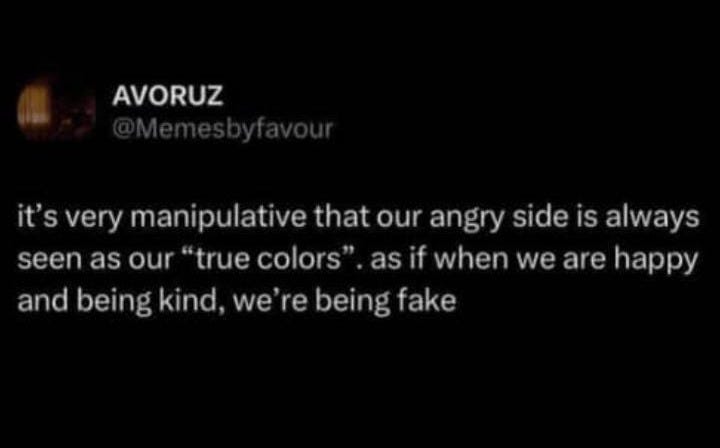
and it made me stop and think about how negative things often seem to overshadow positive ones.
This is just my opinion, but the more I observe people and situations, the more I see it.
Even in simple Mathematics, when you multiply a negative number by one or more positive numbers, the result is negative.
(+30) × (+400) × (+1000) × (-1) = -12,000,000
Of course, mathematics is not meant to explain life, but the idea is interesting. Sometimes it feels like one negative element can affect the whole outcome, even when something positive is there.
And if you pay attention, you'd see that this pattern shows up in many areas of life.
Think about reputation. Someone can spend years being kind, respectful, and helpful to others. But one moment of anger or one mistake can suddenly become the story people remember. All the good things they have done before may slowly fade from people’s minds, while that one negative moment becomes the focus.
Also, imagine receiving ten compliments and one criticism. The compliments should logically matter more, but most people will spend more time thinking about the one negative comment. The praise is appreciated, but the criticism stays in the mind longer.
Trust works in a similar way. Building trust usually takes time but breaking that trust can happen very quickly. One betrayal or one broken promise can damage something that took a long time to build.
Even in everyday relationships, this pattern can appear. You may have many calm, friendly interactions with someone. But if one conversation turns sour, it can suddenly change how you see the relationship. There’s a friend I stopped talking to because of one conversation. He posted an opinion I strongly disagreed with. It wasn’t just that I disagreed... the reasoning behind it felt flawed to me, so I tried to point it out. The conversation didn’t end well, and after that day, we simply stopped talking. Before that, we never really had issues... we got along just fine. But somehow that one moment changed everything. And that makes me wonder how often this happens. Not just with others judging us, but with the way we judge people too.
Another clear example is, every day there are many positive things happening in the world... people helping each other, communities supporting one another, small acts of kindness everywhere. But the stories that spread the fastest are usually the negative ones. Conflicts, disasters, and scandals.
And sometimes we even do this to ourselves. We may have done many things well, but the one thing that went wrong is often the thing we keep thinking about.
There is actually a psychological idea that explains this pattern called Negativity Bias. It suggests that people naturally pay more attention to negative experiences than positive ones.
Many psychologists and other social scientists believe that humans have evolved to focus on negative events, emotions, outcomes, and information more than positive ones. Scientists believe that negativity bias evolved in humans because it helped keep them safe at a time when they were more likely to be exposed to threats from nature such as wild animals and severe weather events. If a person missed a threat from a wild animal or a negative weather event, they could be injured or die. For that reason, over many generations, negativity bias most likely became a dominant trait that helped keep people alive. Although negativity bias was once a useful trait for humans, the changes in their lives have made this trait more harmful than helpful to people. Negativity bias can prevent humans from enjoying the good parts of life and taking risks that might actually be helpful.
– ebsco.com
Maybe that’s why negative moments often feel louder than positive ones.
But noticing this also raises an interesting question.
If the negative stands out so easily, how intentional do we need to be to notice the positive too?
Let's talkkk!
Meanwhile, you might also want to check out previous episodes…
For peace? Let's Talk About It (1)
Is God fully in control? Let's Talk About It (2)
Thanks for staying with me, see you on the next one! 😉
This topic is really... ( I don't know what to call it). But, for people and friendships, seeing things from their perspective, allowing them to explain can do a little. Their explanation will now make us decide whether to give grace or not.
I don't know if this thing can really change. Because there is a saying that "how you act in the face of negative things e.g anger, fights, bribery attempt shows your true character."
I think the problem is that most people see things as 'black and white' when we humans are not even black and white — so the situations we find ourselves can't be treated as 'black and white'.
Imagine someone who has been good all his life, gets threatened and is very scared, does something bad and gets caught.
People judge, without putting themselves in that person shoes.
People have built images of us in our head and expect us to live up to it. We don't need to do that actually.
That's why living for yourself and wisdom is very important.
And also... How grounded are you about your beliefs(which can include faith) and values.
Can you 'die' while standing your ground. Can you die because you don't want to compromise your beliefs.
A big example is the election system in this country... You get what I'm trying to say right? No one wants to die because they didn't vote for a person.
I hope I made sense 🥲